
Description
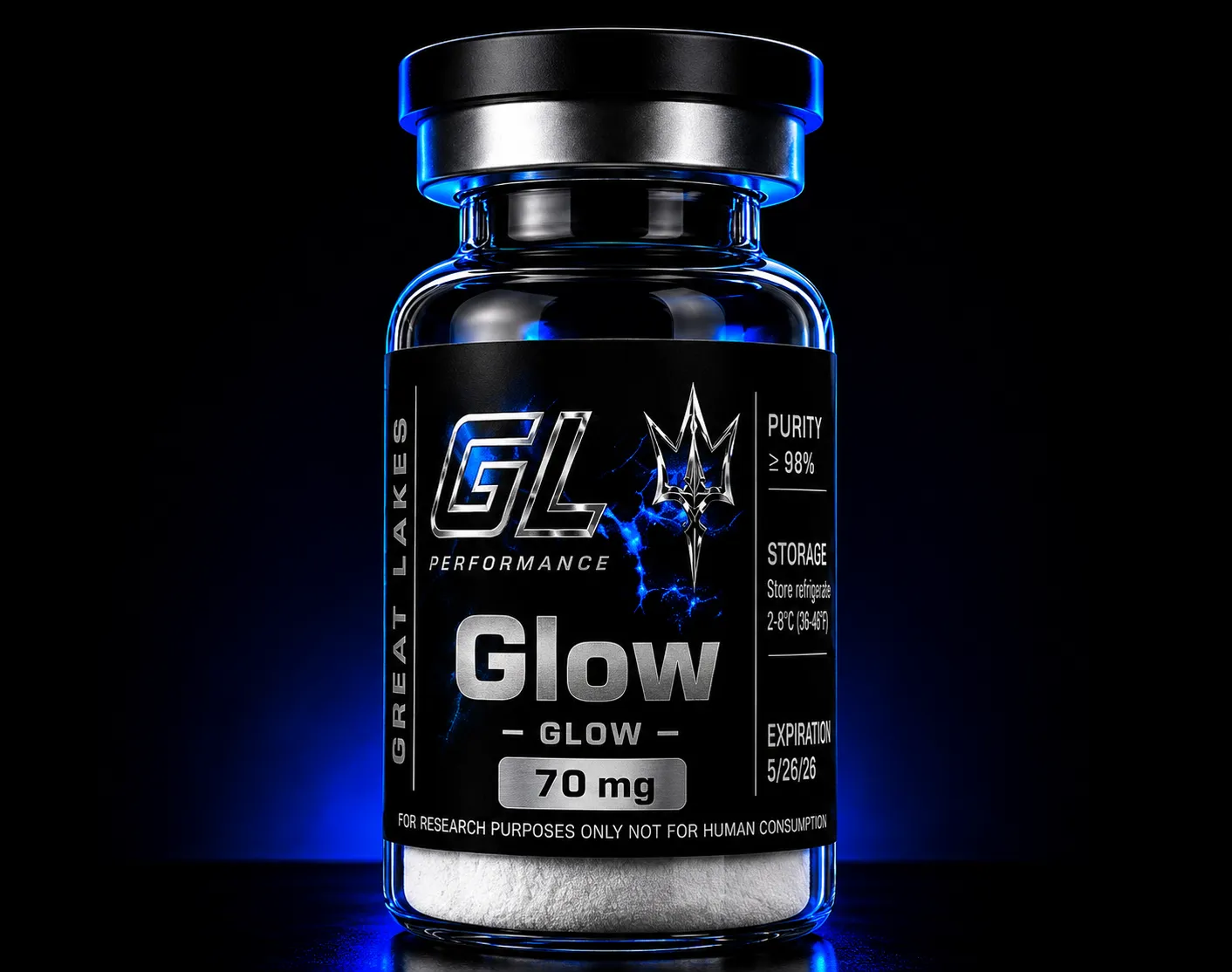
Glow Blend
At Great Lakes Performance, we believe healthy skin starts from within. Recovery, collagen production, and tissue health all play a role in helping you look and feel your best.
Glow Blend is commonly formulated with GHK-Cu, BPC-157, and TB-500, combining three investigational peptides into a single blend. Each peptide has been studied for different aspects of tissue repair and skin biology, making this combination a popular area of research for skin quality and overall recovery. (Origin Compounds)
In Simple Terms
Think of Glow Blend as a team where each member has a different job:
- GHK-Cu is being studied for its potential role in collagen production, skin appearance, and hair health.
- BPC-157 is being researched for its potential to support soft tissue repair and the body’s natural recovery processes.
- TB-500 is being investigated for its potential role in supporting flexibility, mobility, and tissue healing.
Together, these peptides are being researched to better understand how they may complement one another in supporting healthy skin and connective tissue. (Origin Compounds)
Potential Areas of Research
Research is investigating whether Glow Blend may:
- Support healthier-looking skin
- Promote collagen production and skin elasticity
- Support tissue repair and recovery
- Promote healthy hair and scalp biology
- Support joint and connective tissue health
- Aid recovery from strenuous physical activity
The GL Performance Perspective
Looking your best starts with healthy habits. Proper nutrition, hydration, quality sleep, regular exercise, and sun protection are the foundation of healthy skin and recovery. Glow Blend is being researched as a tool that may complement those lifestyle choices—not replace them.
At Great Lakes Performance, our mission is built on Quality, Integrity, and Longevity. We are committed to providing honest, science-based education so our clients can make informed decisions about their wellness journey.
Important
Glow Blend contains investigational peptides. These compounds have not been approved by the U.S. FDA for general medical use, and their safety and effectiveness continue to be evaluated in research.


There are no reviews yet.